The Names We Kept Moving Around
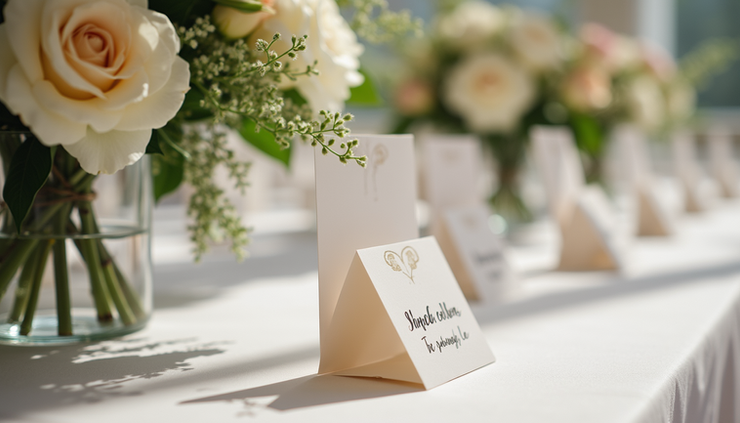
There are plenty of wedding tasks that couples expect to be difficult. Choosing a venue can take weeks. Setting a budget often involves compromise. Building a guest list has a reputation for creating more conversations than anyone anticipated.
The seating plan rarely receives the same warning.
For most people, it sits quietly on the checklist until the wedding starts getting closer. Compared to the bigger decisions, it seems relatively straightforward. Once the RSVPs are back and the tables are arranged, all that's left is deciding where everyone sits.
At least that's how it looks at first.
The reality is that many couples end up spending far longer on their seating plan than they ever expected. Not because the tables are complicated, but because the people sitting around them aren't just names on a spreadsheet.
Every guest arrives with their own relationships, friendships, histories and connections to the people around them. Some guests know half the room. Others only know the couple. Some groups naturally fit together, while others could comfortably sit at several different tables without any obvious answer standing out.
That's usually the point where the seating plan changes from a simple organisational task into something much more personal.
One of the surprising things about wedding planning is how often decisions are made using numbers. Budgets are numbers. Guest counts are numbers. Timelines are built around numbers. The seating plan is one of the first moments where those numbers start becoming real people.
Suddenly you're not looking at a list of eighty guests anymore. You're thinking about the friend who moved across the country and won't know many people there. You're thinking about family members who haven't seen each other for years. You're thinking about the colleague who was one of the first people to support your relationship but doesn't naturally belong to any of the friendship groups attending the wedding.
None of these situations are problems. In fact, they're often a reflection of how many different stages of life have led to this one day.
The challenge is that there isn't always a perfect answer.
A guest might be happy at two or three different tables. One option may make sense because of age. Another because of shared interests. A third because it would create a good balance of personalities. Every choice seems reasonable, which is often why couples find themselves moving the same names around several times before settling on a final arrangement.
It's easy to assume this happens because people are overthinking.
More often, it happens because people care.
Nobody wants a guest to spend the evening feeling isolated. Nobody wants someone to arrive at a table and feel like they were placed wherever there happened to be an empty seat. Most couples have attended enough weddings to know how much easier an evening feels when conversations flow naturally and there are familiar faces nearby.
That doesn't mean every table needs to be perfect.
One of the most reassuring things many couples discover is that guests tend to be far more adaptable than expected. People chat with strangers. They reconnect with relatives they haven't seen in years. They find common ground with people they would never normally meet. The seating plan helps create those opportunities, but it doesn't need to control every moment of the evening.
In many ways, that's what makes the process so meaningful.
A seating plan isn't simply a chart showing where people will sit during dinner. It's one of the few parts of wedding planning that asks couples to stop thinking about logistics and start thinking about the experience they want their guests to have.
When approached that way, the extra time spent on it starts to make sense.
You're not just organising tables.
You're thinking about the people who have been part of your story, the relationships that have shaped your life, and the atmosphere you hope to create when all of those people finally find themselves together in the same room.
Perhaps that's why so many couples remember the seating plan long after it has been printed. What looks like a practical task on the surface often turns out to be one of the most thoughtful parts of the entire planning process.


Comments